Review the System
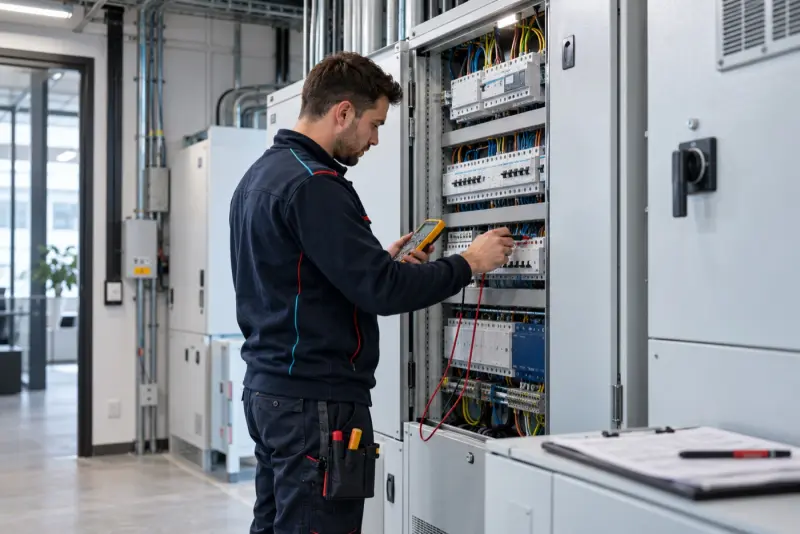
Identify the fittings, the test facilities and the existing records for the building.



Life safety lighting · London
Routine testing, fault repair and record keeping for emergency lighting in commercial premises, blocks of flats and managed buildings.
Simply Electrical Contractors
Emergency lighting is there to light escape routes, exits and safety equipment when the normal supply is lost. Batteries age and lamps fail quietly, so the only way to know a system will work in an emergency is to test it regularly and keep a record of the results.
British Standard guidance calls for a short function test of every fitting each month and a full-duration discharge test each year, in which the fittings must stay lit for their rated period, typically three hours. Simply Electrical Contractors carries out both, along with the repairs and replacements that testing brings to light.
After each visit the log book is updated with the fittings tested, the results and any defects found. Failed fittings and batteries can be replaced, and gaps in coverage are pointed out so the responsible person can decide what to do next.
What to expect
Details vary by property and service, but the process is built around assessment, explanation and appropriate testing.
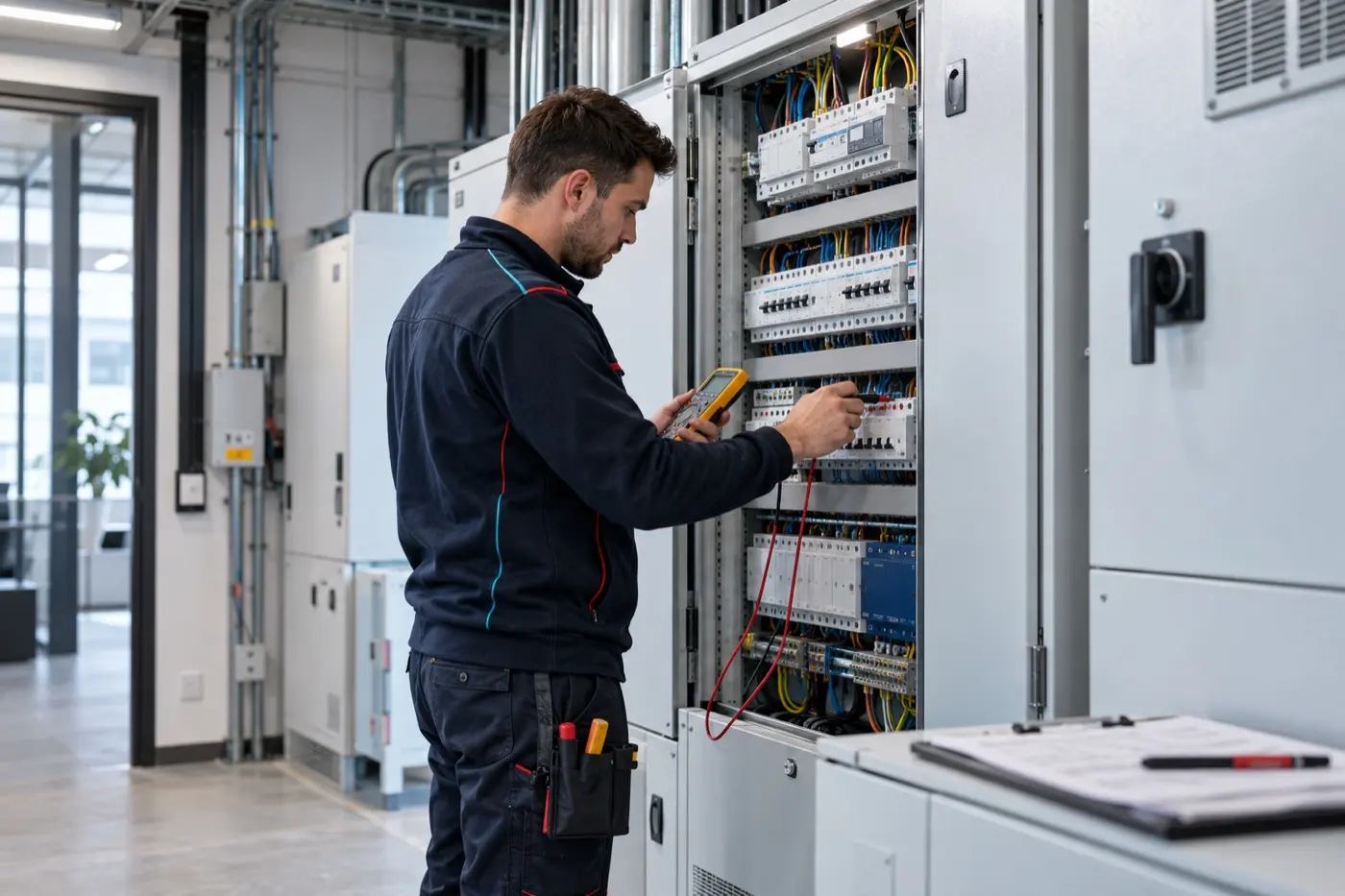
Identify the fittings, the test facilities and the existing records for the building.
Function or full-duration tests are completed at a time that keeps the building safe to occupy afterwards.
Results go in the log book, and failed fittings are replaced or quoted for.
Common questions
For advice about a specific property, contact the team with the postcode and job details.
The usual pattern is a brief function test every month and a full-duration test once a year, with the results written in a log book.
A full test drains the batteries, and they can take up to 24 hours to recharge. Testing is planned so the building is not left without cover while it is occupied.
The responsible person for the premises under fire safety law, usually the employer, landlord or managing agent. Routine testing and maintenance are part of that duty.
Yes. Common replacements such as batteries, lamps and complete fittings can often be done during the visit or on a short return visit.