Assess the Supply
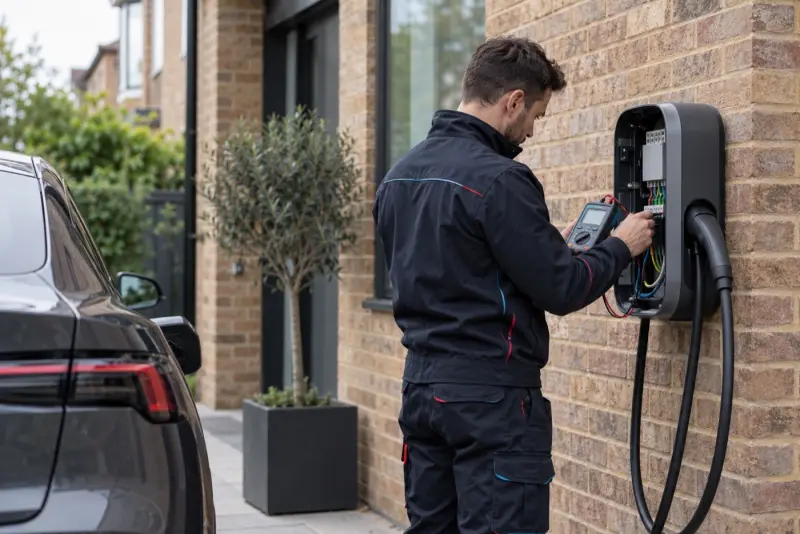
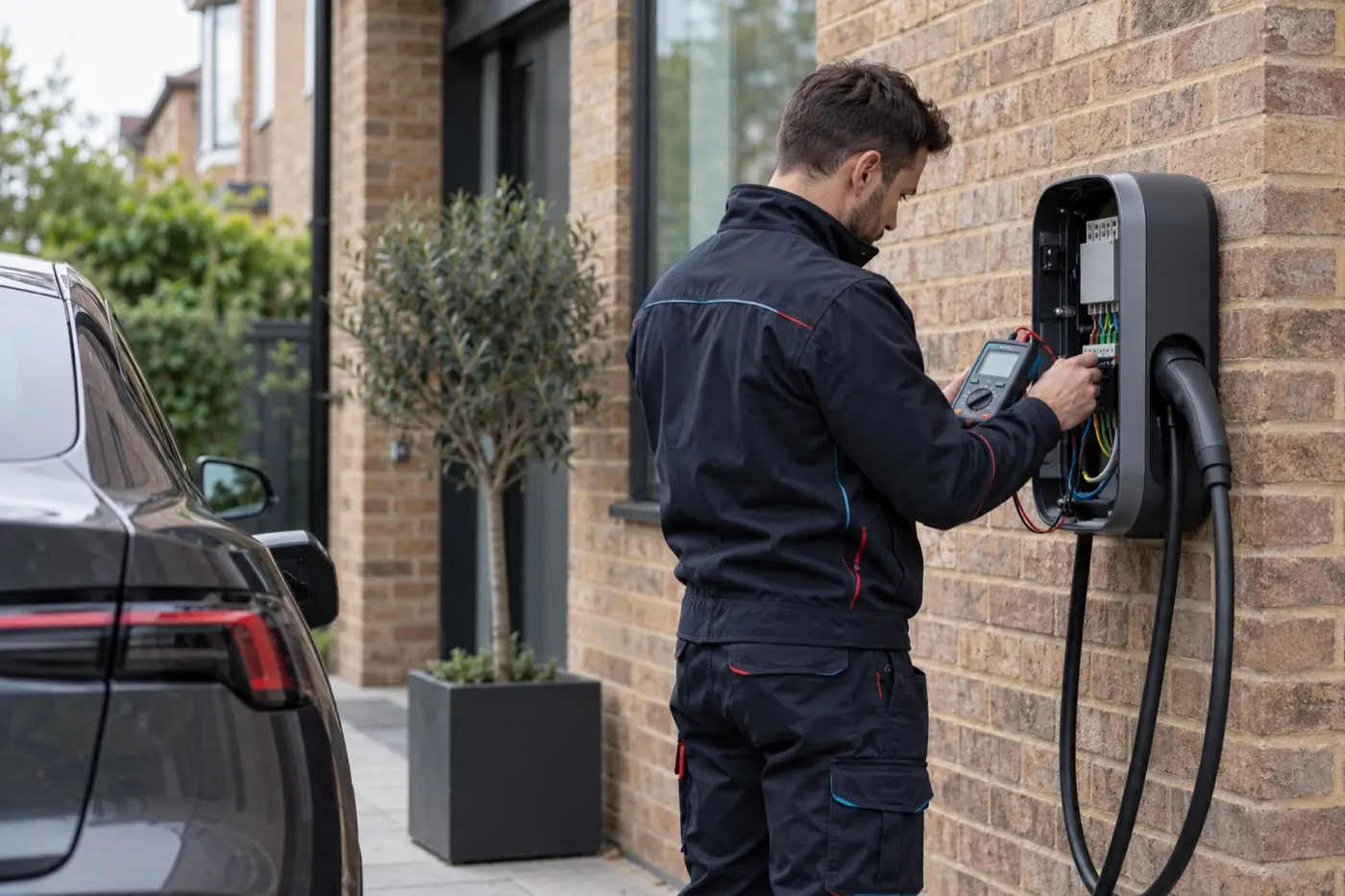
Check the main fuse, earthing, consumer unit and the best position for the charger.



Electric vehicle charging · London
Charge points for driveways, garages, car parks and managed properties, installed on a dedicated circuit after a proper assessment of the electrical supply.
Simply Electrical Contractors
An electric vehicle charger is one of the largest loads in a property, and it may run for hours at a time. Before a charge point is fitted, the incoming supply, main fuse, earthing arrangement and consumer unit are assessed to confirm they can carry the extra demand safely.
Simply Electrical Contractors installs charge points on a dedicated circuit with the protective devices the charger requires. The cable route, mounting position and any groundwork are agreed in advance, and where the supply is limited, load management can be used so the charger backs off when the rest of the property is drawing heavily.
The network operator has to be told about a new charge point, and the installation is tested and certified on completion. You are shown how the charger and its app work, including scheduled charging for off-peak tariffs.
What to expect
Details vary by property and service, but the process is built around assessment, explanation and appropriate testing.
Check the main fuse, earthing, consumer unit and the best position for the charger.
Run the dedicated circuit, mount and connect the charger, and fit the required protection.
The installation is tested and certified, the network operator is notified and you are shown how to use it.
Common questions
For advice about a specific property, contact the team with the postcode and job details.
Most can, but it depends on the supply. Some properties need a main fuse upgrade or load management first, which is identified at the assessment.
A typical single-phase home charger delivers around 7 kW, which adds roughly 25 to 30 miles of range an hour depending on the car. Three-phase supplies allow faster units.
A private driveway or garage makes installation straightforward. Charging across a pavement raises safety and permission questions that should be checked with the local council first.
Yes. The new circuit is tested, an electrical installation certificate is issued and the work is notified under Building Regulations where that applies.